

Beyond the Grind:
5 Counter-Intuitive Truths for the Modern Leader


The Myth of the “Right Decision”
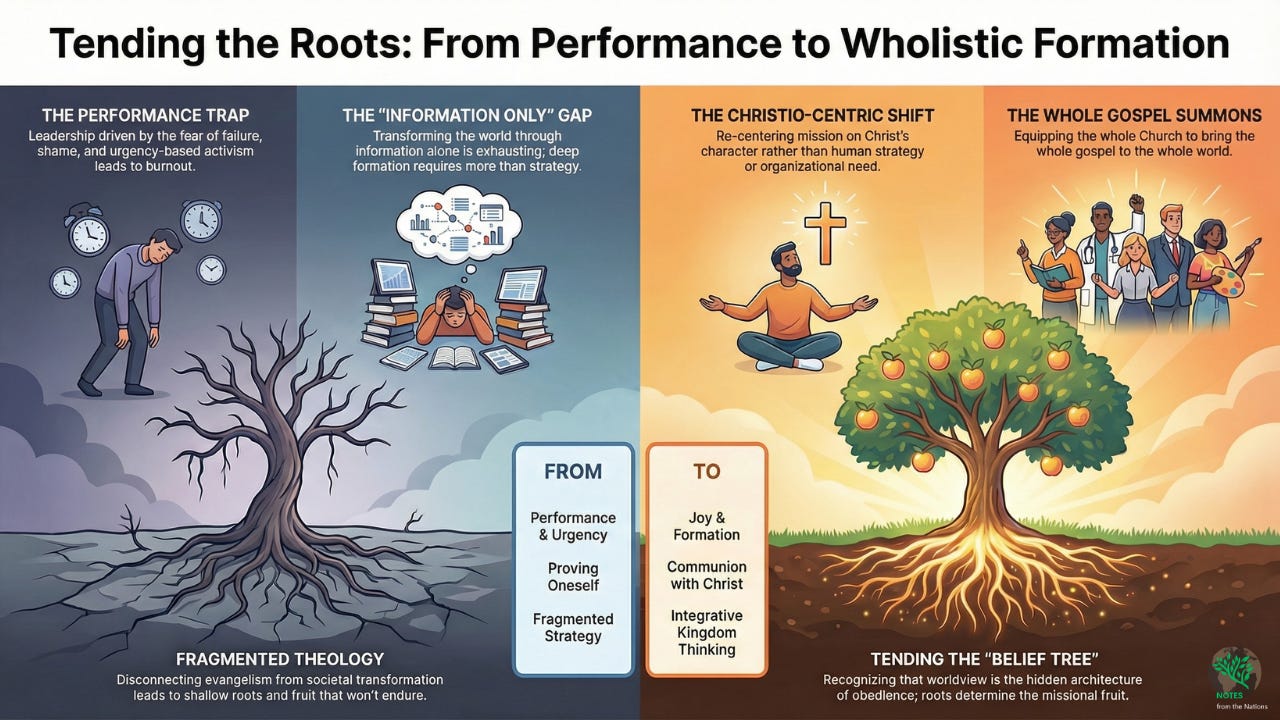
Many leaders operate under a persistent, exhausting illusion: that transformation is a linear equation of acquiring enough information to make the “right decision.” We believe that if we just find the perfect strategy or the most robust data set, our character and organizations will finally align with our vision. Yet, after 62 years of collecting information and trying harder, the reality for many, myself included, is a soul-weariness that persists despite the “right” answers. My journey through YWAM’s University of the Nations Executive Master program in Global Pioneering Leadership (ExecMAL) has been a deconstruction of this myth. Real change is not an information problem; it is a formation problem. It requires moving past the left-brain grind of “Reason + Decisions” and into the systemic “soul-work” of the Kingdom.
1. Why Your “Try Harder” Strategy is Failing (The Identity Formula)
In modern leadership, we are raised on performance metrics that favor the left brain. We operate as if Reason + Right Decisions = Transformation. Neurologically and spiritually, this is a dead end. This hemisphere is fueled by fear, obligation, and the pressure to perform, which inevitably leads to “fixing problems” rather than “remaining relational.”
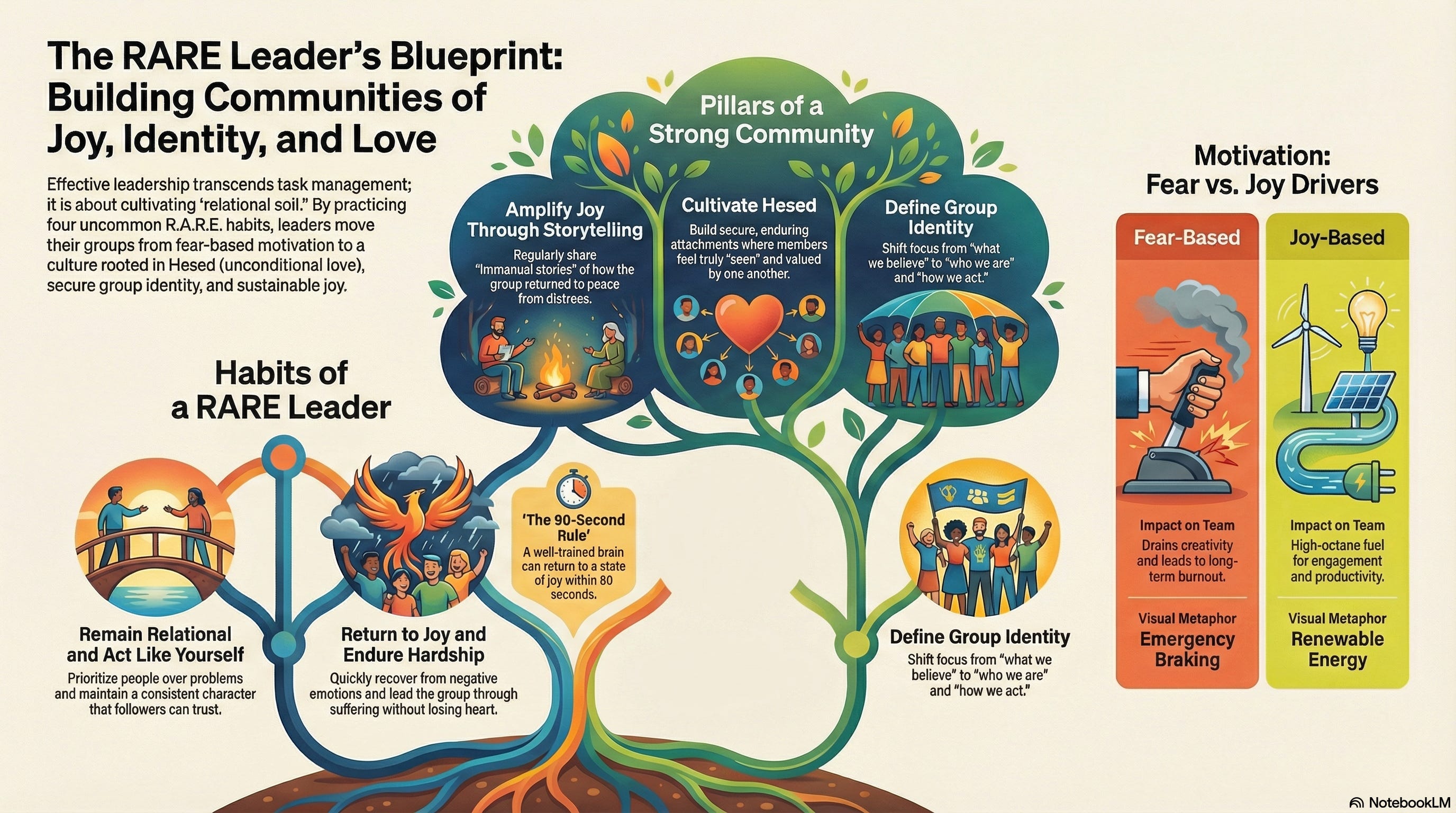
True transformation follows a different formula synthesized by Jim Wilder: Identity + Belonging = Transformation. This process is powered by the right brain’s “joy center.” It runs on hesed—a multifaceted Hebrew concept describing God’s patient, sticky, covenantal love. When we belong to a community of identity where others are genuinely glad to be with us, we move from fear-based striving to joy-based maturity. For the strategist, the task is no longer managing better, but fostering a deep sense of belonging that serves as the operating system for growth.
I can testify that 62 years of getting information and trying harder to make the “right decisions” has not brought transformation. But... a whole other mode, an entire second hemisphere of the brain, can be engaged in spiritual formation and character development.
2. The Radical Vulnerability of a “Heartbroken” God
We often lead from a mental image of God as a detached judge, an “impassible” deity untouched by our failures. However, the “Family Sphere” and the narrative of Hosea reveal a startlingly different reality: God identifies as a faithful husband to an unfaithful bride. He is not a distant observer but a “heartbroken lover” who has placed His heart on the line.
This shifts leadership motivation from duty to hesed. If God is deeply impacted by our choices, our primary role is to protect a relationship rather than meet a quota. This “vulnerable God” is, in a sense, a “pushover”, quick to relent and forgive at the first sign of repentance, as seen in the accounts of Jeremiah and Jonah. When hesed becomes the operating system of our leadership, we stop “lording it over” others and begin to lead from a place of steadfast, sacrificial presence.
God knows that He himself is a “pushover” and that at the first sign of repentance God will relent.
3. The “Curse of Knowledge” and the Power of the Non-Expert
Expertise is a double-edged sword. As we become “experts,” we fall victim to the “Curse of Knowledge”—we forget what it is like not to know, and we become more concerned with protecting our status than taking new risks. Mission drift often happens when an organization has too much to lose.
To break this stagnation, Kingdom innovation requires the “non-expert” and the “balladeer.” As described by Darrow Miller, the balladeer integrates education, communication, and celebration to shift culture through influence rather than top-down authority. Innovation often comes from the fringe, from those who ask disruptive questions because they aren’t blinded by “the way we’ve always done it.” True influence creates a “viral” culture of righteousness that legislation and authority can never coerce.
“Viele kleine leute die in vielen kleinen orten viele kleine dinge tun, können das gesicht der welt verändern.
Many small people who in many small places do many small things that can alter the face of the world. ”
-found on a portion of the Berlin Wall after it was torn down.
4. Success is Often the Greatest Hindrance to Learning
We naturally view success as favor and hardship as failure. In reality, past successes often make us closed to the “exponential opportunities for learning” that only crisis provides. In our missions movement we can see this in the lives of Loren and Darlene Cunningham, who had to “re-pioneer” Lausanne and Kona through recurring trials, and in leaders like Garth in Cambodia, who navigated the fear-inducing, heart-wrenching years of COVID-19.
Maturity is not the absence of struggle; it is the capacity to “endure hardships well.” This is the essence of RARE leadership. To be a RARE leader, one must: Remain relational, Act like oneself, Return to joy, and Endure hardship well. When we believe we are entitled to an easier life because of previous victories, we lose our edge. Suffering does not signify God’s absence; it is often the very environment where we are invited to “strengthen ourselves in the Lord.”
5. The “Meno” Mandate: The Goal is Not the Mission, but the Presence
The modern missions movement is often plagued by “The Great Imbalance.” While we often define this as the lopsided focus on “blessing our own people” versus “blessing all nations,” it also manifests as a focus on “doing” tasks over “dwelling” in presence. The biblical narrative is not about us escaping earth; it is about Meno—the mandate to abide, remain, and dwell.
The “Emmanuel initiative” was God moving into our neighborhood to stay. When mission tasks (doing) eclipse attachment love (dwelling), we produce spiritual self-gratification rather than healthy intimacy. Transformation does not flow from programs, but from the relational foundation of abiding. We must address the imbalance by becoming a light to the “Gentiles”—the outsiders—not through more activity, but through a more profound dwelling in the presence of the Father.
“The Word became flesh and blood, and moved into the neighborhood.”
- John 1:14 The Message
Conclusion: From Success to Steadfastness
The transition for today’s kingdom catalysts is a shift from “conquering spheres” to “serving them through influence and presence.” It is the realization that a visible empire is hollow if we lose our souls, our families, or our capacity for hesed. We must trade the desire for a “guaranteed” life for a “steadfast heart” that remains secure even when the story unfolds tragically.
title=”YouTube video player” frameborder=”0” allow=”accelerometer; autoplay; clipboard-write; encrypted-media; gyroscope; picture-in-picture; web-share” referrerpolicy=”strict-origin-when-cross-origin” allowfullscreen></iframe>
Final Ponderable: As we look to the “Joshua Generation” currently arising, a generation being raised to influence nations rather than merely occupy them, ask yourself: Are you more concerned with finishing “big” with a legacy of authority, or finishing “well” with a legacy of steadfastness and presence?
Book Recommendations:
A CALL FOR BALLADEERS - Pursuing Art and Beauty for the Discipling of Nations